The Compendium: rules lookup at the table
Spells, magic items, conditions and feats from the D&D 5e SRD — the 2024 rules and the 2014 rules — searchable and filterable, so a mid-session rules question does not cost five minutes.
The Compendium is a rules lookup you can use without leaving the table: spells, magic items, conditions and feats from the D&D 5e SRD, in one searchable place — for the 2024 rules and the 2014 rules alike.
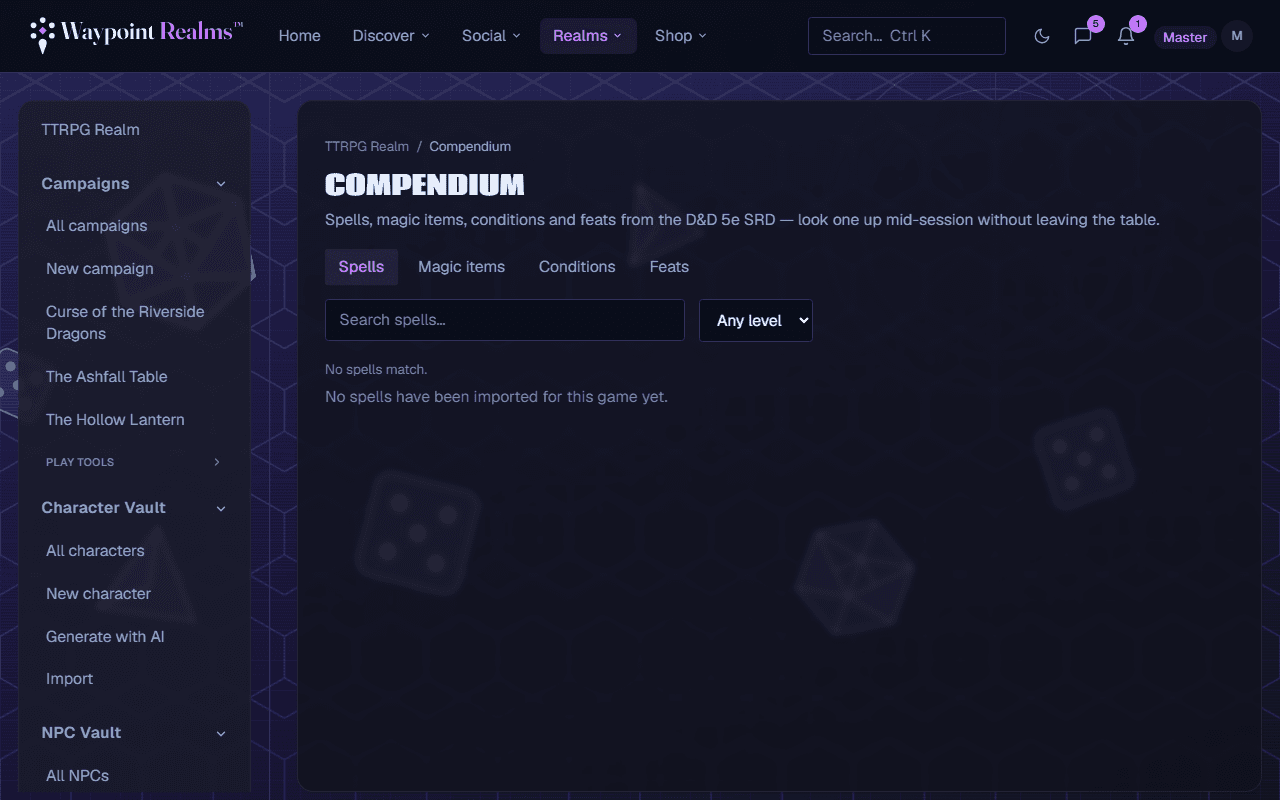
What is in it
- Spells — searchable, and filterable by school and by level. Each card shows school, components and casting time before you open it.
- Magic items — what it does and what it takes to use it.
- Conditions — the one you actually look up mid-fight, because nobody remembers exactly what restrained does.
- Feats — for levelling up between sessions.
2024 rules and 2014 rules
The Compendium holds two versions of the SRD side by side: SRD 5.2.1, the 2024 rules, and SRD 5.1, the 2014 rules. Many entries exist in both with different text — Fireball is in each, and the 2024 conditions read differently — so the Rules filter shows one at a time. It opens on the 2024 rules. Every entry says which rules it comes from, and switching the filter clears the school and level choices, because the two versions sort some things differently (2024 feats are Origin, General, Fighting Style and Epic Boon feats).
Spell and item links on a character sheet open the 2014 entry. The bestiary works the same way: its D&D rules filter picks 2024 or 2014 stat blocks, and other systems are not affected by it.
SRD content only
The 2024 entries are SRD 5.2.1 material, shared under the Creative Commons Attribution 4.0 licence, so each 2024 page carries Wizards of the Coast's attribution statement.
Faster than a search engine mid-session
Related lookups
Creature stat blocks live in the bestiary rather than here, and the tools for building a fight out of them are in NPCs, encounters & loot.
Still stuck? Browse all help or contact us. To report someone or something, use the report action on the relevant profile, post, or session — it sends us the context automatically.